
Natural Stone Restoration Sydney
Marble, travertine, sandstone, limestone and slate are beautiful materials, but they’re also soft and porous compared to standard tile. Over time, scratching, etching from acidic spills, staining, moisture, and the wrong cleaning products can leave a stone floor looking tired and uneven, even when the stone itself is perfectly sound. Restoration brings that original character back, rather than covering it up.
- Stone Specific Methods
- Diamond Polishing Equipment
- Residential & Commercial
What Happens To Natural Stone Over Time?
Natural stone ages differently to ceramic or porcelain tile. Because it’s a softer, more porous material, everyday wear shows up in ways that ordinary cleaning can’t fix — and sometimes makes worse.
Scratching
Grit, furniture and foot traffic gradually scuff the surface, leaving fine scratches that dull the stone’s natural sheen.
Dullness
A once glossy floor can lose its shine simply through years of walking, cleaning, and general use.
Etching
Acidic spills, wine, citrus, and some cleaning products react with calcium-based stones like marble and travertine, leaving dull marks.
Staining
Because stone is porous, oils, wine and other liquids can soak in rather than sit on the surface, leaving marks that don’t wipe away.
Uneven Finish
Patchy wear, previous DIY treatments or inconsistent sealing can leave some areas glossy and others flat or dull.
Surface Wear & Residue
Old sealers, soap residue and cleaning product build-up can leave a hazy film that makes stone look older than it is.
Our Natural Stone Restoration Services
Not every stone floor needs the same treatment. A lightly worn travertine entryway and a heavily etched marble kitchen bench call for entirely different approaches; we match the service to the stone and its actual condition.
Stone Cleaning
A deep clean using stone-safe products to lift dirt, grime and residue without damaging the surface or its existing finish.
Stone Honing
Fine mechanical grinding that levels out scratches, etching and unevenness, producing a smooth, consistent matte finish.
Stone Polishing
Diamond polishing to bring out a glossy, reflective finish is typically the final step once the surface has been properly levelled.
Stain Treatment
Poultice and targeted treatments to draw stains out of porous stone, used where standard cleaning hasn’t been enough.
Surface Restoration
A combined process addressing scratching, wear and finish issues together, for stone that’s been neglected or heavily used.
Stone Sealing
An appropriate sealer applied after restoration to help protect against future staining and moisture penetration.
Polishing isn’t always the right answer. Some stones, like honed limestone or certain sandstones, are meant to have a matte, natural finish, and a high gloss polish would actually work against the look and slip resistance you want. We’ll recommend what suits your stone, not just the most visually dramatic option.
Stone Types We Work With
Every stone has its own hardness, porosity and sensitivity to acid and heat. We treat each type according to its own characteristics.
Our Restoration Process
A measured, six-step process that avoids rushing straight to polishing before the groundwork is right.
Inspect the Stone
We identify the stone type and check for existing damage, previous sealing and how it’s been maintained.
Identify the Surface Condition
Scratching, etching, staining and wear are assessed to understand what’s actually causing the appearance.
Select the Correct Treatment
Honing, polishing, stain treatment or a combined approach is chosen based on the stone and its condition.
Restore the Finish
Diamond abrasives and stone-appropriate equipment are used to level and refine the surface.
Protect and Seal Where Appropriate
A suitable sealer is applied when it will genuinely help protect the finish going forward.
Final Inspection
We check the result against the original brief and walk you through ongoing care.
Before & After
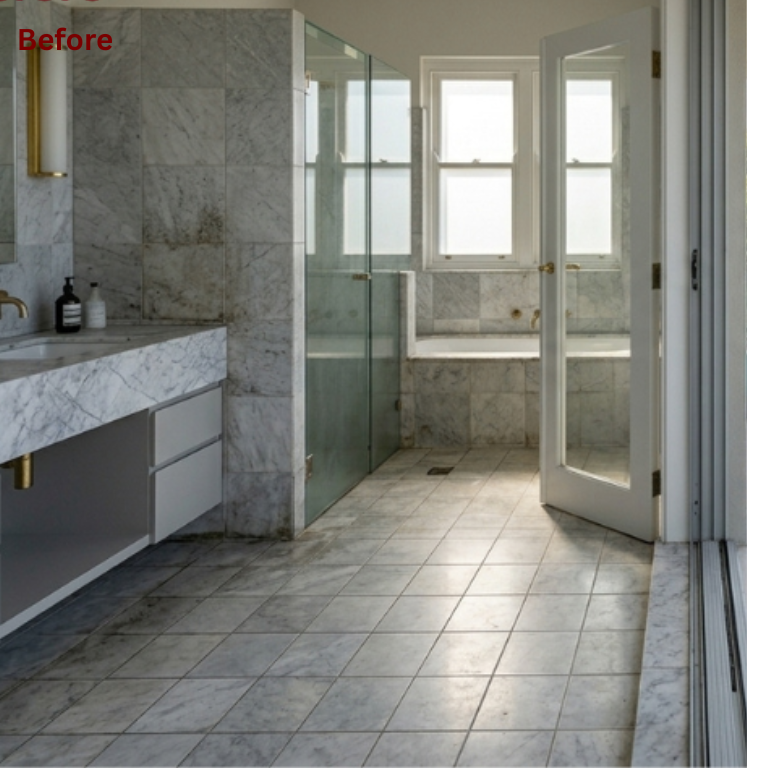
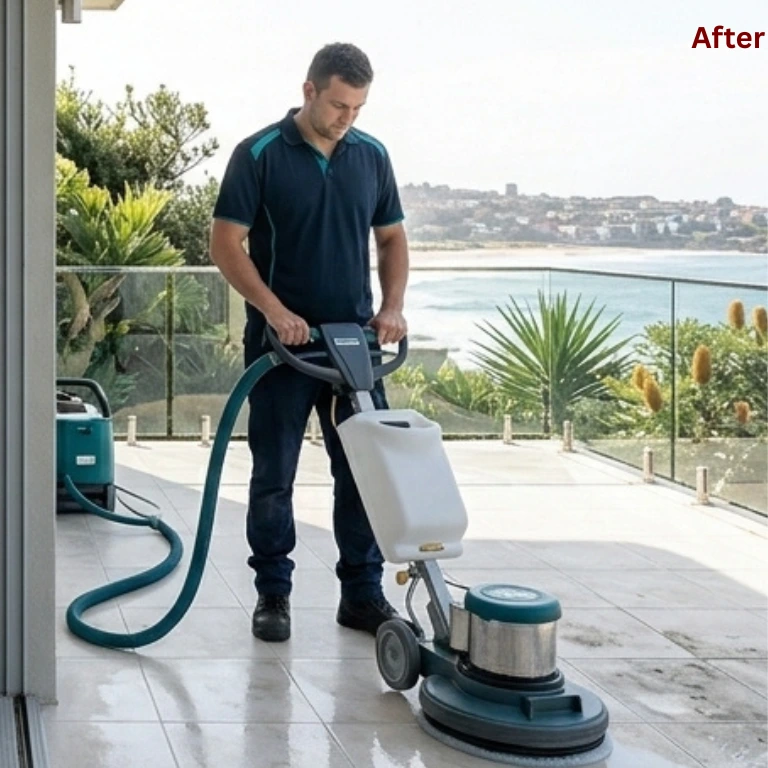
Outcomes depend on the stone type, how deep any scratching or etching goes, and its overall condition; restoration refines and revives stone, it doesn’t reinvent it.
Why Specialist Stone Care Matters
Natural stone isn’t ceramic tile with a nicer name. It’s a softer, more reactive material that needs to be treated on its own terms.
Correct Surface Assessment
We identify the stone and its condition before recommending any treatment.
Stone Specific Methods
Marble, sandstone and granite each need different products, pressure and technique.
Professional Equipment
Diamond honing and polishing equipment achieves results domestic tools can’t replicate.
Controlled Restoration
We work in stages, checking results as we go rather than over-processing the stone.
Long Term Care Advice
We explain how to maintain the finish, including sealing and everyday cleaning products to use or avoid.
Where We Restore Stone
From individual rooms in a family home to full commercial fit-outs, we scale our process to the space.
Frequently Asked Questions
How much does natural stone cost in Sydney?
It depends on the stone type, the size of the area and how much correction is needed — a light polish costs less than a full honing and stain treatment. We provide a fixed quote after assessing the stone in person.
Can you remove scratches from marble floors?
In most cases, yes. Surface-level scratches respond well to honing and polishing. Very deep gouges may still be visible after treatment, but they’re generally softened significantly. responds well to hot water extraction and the right pre-treatment. That said, very old staining that has permanently discoloured the grout may not return to its original color; we’ll let you know what to realistically expect during the assessment.
What is etching and can it be fixed?
Etching happens when something acidic, like wine, lemon juice, or some cleaners, reacts with calcium-based stone, like marble or travertine, leaving a dull mark. It’s not a stain sitting on top, so it can’t be cleaned away, but honing and repolishing the surface typically restores the finish.
Does stone need to be sealed after restoration?
Often, yes, particularly for porous stone like travertine, limestone, and sandstone in wet or high-traffic areas. Sealing isn’t automatic for every job, though we’ll recommend it where it genuinely adds protection.
Can you treat stains in natural stone?
Yes. Because stone is porous, staining often sits below the surface, so we use targeted poultice treatments designed to draw the staining out rather than just cleaning the top layer.
How long does stone restoration take?
A single room typically takes half a day to a full day, depending on the stone’s condition. Larger areas or full honing-and-polishing jobs can take longer — we’ll give you a realistic timeframe with your quote.
Will my stone look brand new after restoration?
Restoration significantly improves the appearance and finish of most stone, but it’s a revival process rather than a reset to factory-new condition. We’ll talk through a realistic outcome before starting.
Does damaged stone always need to be replaced?
Not usually. Most scratching, dullness, etching and staining can be addressed through honing, polishing and targeted treatment. Replacement is generally only necessary where the stone itself is cracked, structurally compromised or missing sections.
Give Your Stone a Second Life
Book a stone assessment and we’ll tell you honestly what your floor needs — whether that’s a clean, a hone, a polish or a full restoration.